Findings, Nerdery

The Economics of Buying Local

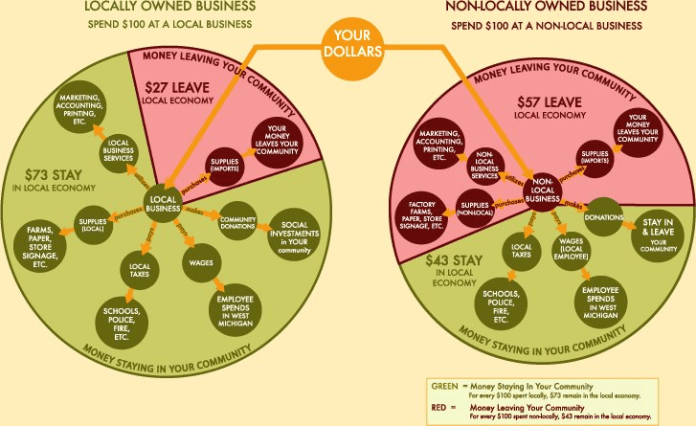
Why buy local? Infographic information on where your money goes if you spend it with a local company.

Buying from local merchants means $.73 of every dollar stays in your community’s economy. Buying from an outlet of a non-local merchant means only $.43 of every dollar stays in your community’s economy.

Ever dollar spent therefore provides either $.30 contributed in bonus to your local economy, or $.30 that goes somewhere else.

Buying from non-local merchants may save you a small amount of money today. But it impoverishes you and your neighbours tomorrow.

And when you’re impoverished, price becomes the most important factor in purchase decisions. Then you’re way more likely to buy from a non-local merchant. The cycle continues and worsens.

It’s like the opposite of compounding interest: compounding deficit.

And once you get beyond the simple economic benefits of buying local, these additional 10 effects weigh in favour of supporting local businesses (in this case, in Grand Rapids, Michigan).

1. Significantly More Money Re-circulates In Greater Grand Rapids.

When you purchase at locally owned businesses rather than nationally owned, more money is kept in the community because locally-owned businesses often purchase from other local businesses, service providers and farms. Purchasing local helps grow other businesses as well as the Greater Grand Rapids tax base.

2. Non Profits Receive Greater Support.

Local business owners donate more to local charities than non-local owners.

3. Unique Businesses Create Character & Prosperity

The unique character of Grand Rapids is what brought us here and keeps us here. Our tourism businesses also benefit.

4. Environmental Impact Is Reduced.

Local businesses make more local purchases requiring less transportation and usually set up shop in town centers rather than on the fringe. This generally means contributing less to sprawl, congestion, habitat loss and pollution.

5. Most New Jobs Are Provided By Local Businesses.

Small local businesses are the largest employers nationally.

6. Customer Service Is Better.

Local businesses often hire people with more specific product expertise for better customer service.

7. Local Business Owners Invest In Community.

Local businesses are owned by people who live in this community, are less likely to leave, and are more invested in the community’s future.

8. Public Benefits Far Outweigh Public Costs.

Local businesses require comparatively little infrastructure and more efficiently utilize public services relative to chain stores.

9. Competition And Diversity Leads To More Consumer Choices.

A marketplace of thousands of small businesses is the best way to ensure innovation and low prices over the long-term.

10. Investment In Greater Grand Rapids Is Encouraged.

A growing body of economic research shows that in an increasingly homogenized world, entrepreneurs and skilled workers are more likely to invest and settle in communities that preserve their one-of-a-kind businesses and distinctive character.

Originally found on PSFK, who found it on Local First.
Standard
Findings, Nerdery, Stories

Placenames in Books Through History

Where a book is set is important. Settings can reinforce the centre of power or they can undermine it — the empire seeing itself or being seen from outside.

And places matter to how a story can be told too. Stories have an inheritance if they’re honest. They come from a place, a time and a culture.

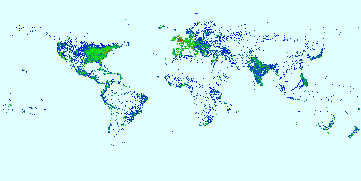
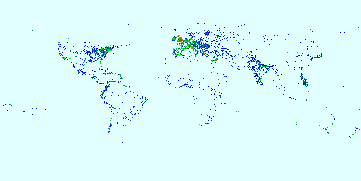
The following maps, generated from Google Books, show the names of places in books over the years.

Placenames in books in 1800

Placenames in books in 1800


Names of geographic locations in books in 1830

Names of geographic locations in books in 1830


Names of geographic locations in books in 1860

Names of geographic locations in books in 1860


Names of geographic locations in books in 1890

Names of geographic locations in books in 1890


Names of geographic locations in books today.

Names of geographic locations in books today.

Standard
Findings, Food, Travels, Vancouvering

Sexy Beast: the Giant Pacific Octopus

Loved this long story from Seattle’s The Stranger on the giant Pacific octopus:

Sexy Beast — The Mysteries of the Giant Pacific Octopus

Brendan Kiley captures the octopus in such a wonderful way it’s hard to not want to see one soon in my Pacific freedives.

When we snorkeled in the Mediterranean we often saw octopuses. I pointed one out to Monique one time and as soon as I pointed it saw us and turned a bright red colour. Zounds!

Standard
Findings, Nerdery

Monty Python’s Search for the Holy Grail Opening Credits

The video:

The excerpts:

  • Moose Trained by
  • Special Moose Effects
  • Moose Costumes
  • Moose choreographed by
  • Miss Taylor’s Mooses by
  • Moose trained to mix concrete and sign complicated insurance forms by
  • Mooses noses wiped by
  • Large moose on the left hand side of the screen in the third scene from the end, given a thorough grounding in Latin, French, and ‘O’ Level Geography by
  • Suggestive poses for the moose suggested by
  • Antler-care by

No! Realli! She was Karving her initanals on the moose with the sharpened end of a interspace toothbrush givin to her by Svenge-Her brother-in-law-An oslo dentist and the star of many norwegin movies: “The hot hands of a Oslo Dentist”,”Fillings of passion”,”The huge molars of Horst Nordfink”

Mynd you! Moose bites can be pritti nasti….

Standard
Findings, Nerdery

The Urgency of Life and Gompertz Law of Human Mortality

What do you think are the odds that you will die during the next year? Try to put a number to it — 1 in 100? 1 in 10,000? Whatever it is, it will be twice as large 8 years from now.

This startling fact was first noticed by the British actuary Benjamin Gompertz in 1825 and is now called the “Gompertz Law of human mortality.” Your probability of dying during a given year doubles every 8 years. For me, a 25-year-old American, the probability of dying during the next year is a fairly miniscule 0.03% — about 1 in 3,000. When I’m 33 it will be about 1 in 1,500, when I’m 42 it will be about 1 in 750, and so on. By the time I reach age 100 (and I do plan on it) the probability of living to 101 will only be about 50%. This is seriously fast growth — my mortality rate is increasing exponentially with age.

Just in case you ever needed motivation to start doing the most important things in your life right now.

From Gravity and Levity.

Standard
Findings, Nerdery

Fight Club rules people know

Fight Club rules people know.

The Rules of Fight Club

  1. You do not talk about Fight Club.
  2. You do not talk about Fight Club.
  3. Someone yells, ‘Stop!’ The fight is over.
  4. Only 2 guys to a fight.
  5. One fight at a time, fellas.
  6. No shirts. No shoes.
  7. Fights will go on as long as they have to.
  8. If this is your first night at Fight Club, you have to fight.

As elucidated by Tyler Durden (AKA Hobbes of Calvin and Hobbes):

Standard
Travels

There and Back Again: a roadtrip

For the past week and half I’ve been travelling. On the road.

Starting in Vancouver, we drove to Calgary for a cousin’s wedding. Then we drove to Winnipeg to visit family.

Our family has a camp on Lake of the Woods, just east of Kenora. We drove out there for a few nights. We fished and swam and lazed about.

Then we returned to Winnipeg and Monique flew home. I stayed another few days then set out in the car, back west.

I drove to Calgary my first day and stayed with friends.

The next morning I drove south to Missoula, Montana, up and down the Road to the Sun in Glacier National Park. I stayed at a bed and breakfast on the shore of the South Fork river. I open all the windows in my room and slept to the constant sound of rushing water.

I met with a business contact the following morning, then headed west. I passed through the Coeur D’Alene, Idaho, which is pronouced Coor Delane, without a hint of French.

I cross the border again back to Canada and drove up the Kootenay valley. I swam at a beach in Kootenay Lake. I rode the ferry across Kootenay Lake as the sun touched the tops of the mountains and tinted the world golden.

I now sit in The White House hostel in Nelson, BC.

The last leg of my journey is tomorrow, back to home in Vancouver along highway #3.

I created the map at the top of this post to guide me and thought it might be fun to share to show my route. Google Maps also tells me that by journey’s end tomorrow I will have travelled roughly 5,894 KMs.

A few recent photos are in my flickr photostream. I’ll add new ones once I’m back home and settled.

Standard
Nerdery

A Suggestion for Google Analytics

I use Google Analytics for many sites and I use it pretty much every day. I’m not the world’s best user but I’m reasonably competent. I speak from some experience.

And here’s the single thing that would make the product waaay better: Annotations on the activity timeline.

Because you make changes on an ongoing basis to the reporting. So how about show those changes in a nice little annotation on the timeline. Where possible, make the annotations automatically added, especially if the changes are system defined or parameters.

Then let users add notes to the annotations. Create a logbook of those annotations so you can see the change you made over time in stream outside of the timeline. But also make them available in the timeline, because that’s where you want to see them, because that’s where you see the correlative results of the changes.

Standard